When Spotify Wrapped Took Over Williamsburg (And We Had 24 Hours to Capture It)
You can't manufacture a cultural moment.
But you can capture it.
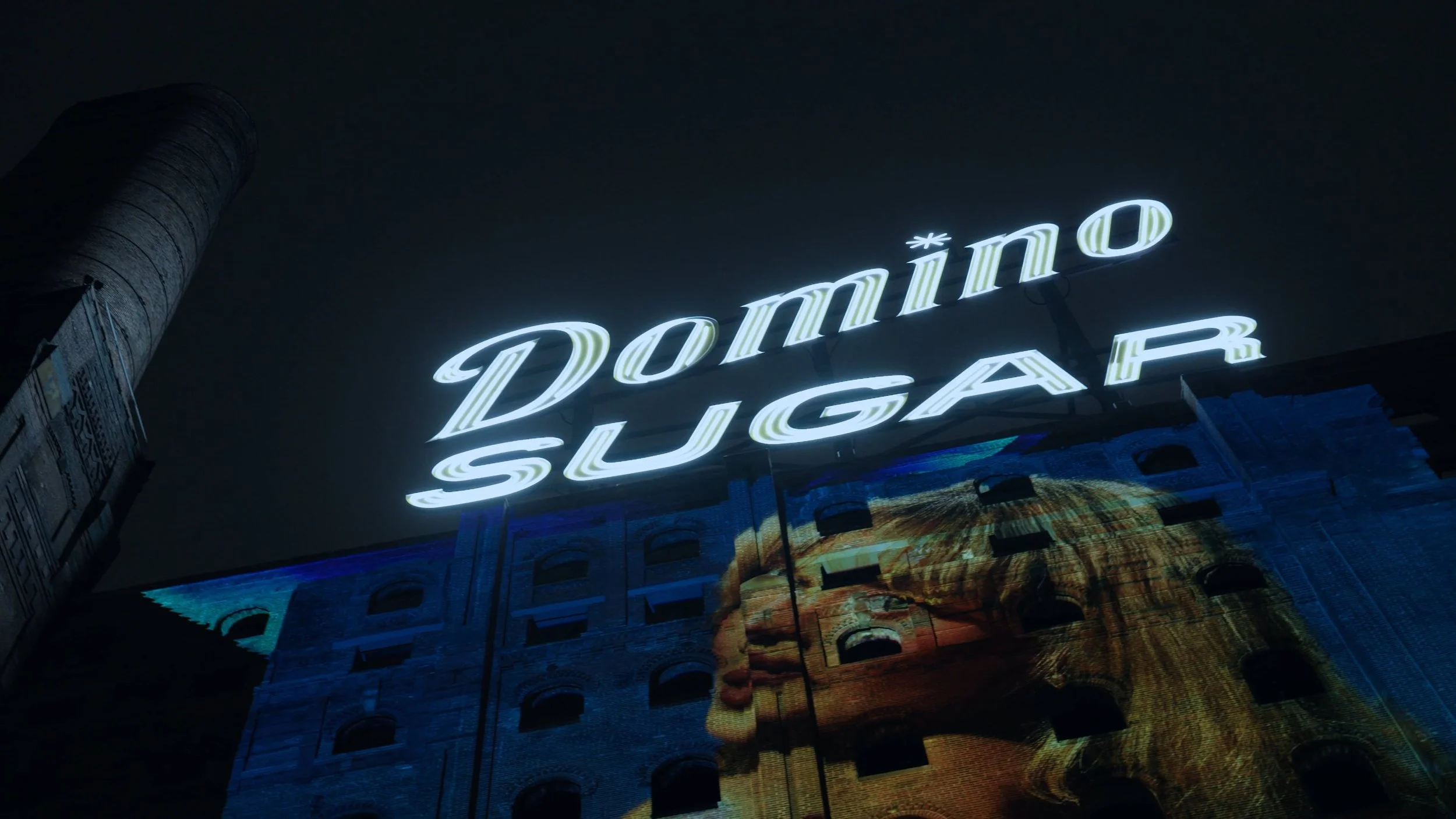
Last December, we got a call on a Thursday afternoon. By Friday evening, Justin was standing on the Domino Sugar Factory waterfront in Williamsburg, our neighborhood, watching Sabrina Carpenter's face project three stories high onto historic brick while joggers and dog walkers stopped mid-stride to stare.
Spotify Wrapped had stepped off the screen and into the streets. And we were there to make it feel shared.
Why Experiential Marketing Is Documentary Filmmaking in Disguise
Every year, Spotify Wrapped turns data into culture.
Screenshots flood Instagram stories. Group chats explode. Entire personalities get temporarily redefined by year-end playlists. It's one of those rare marketing moments that doesn't feel like marketing, it feels like a shared experience everyone's in on.
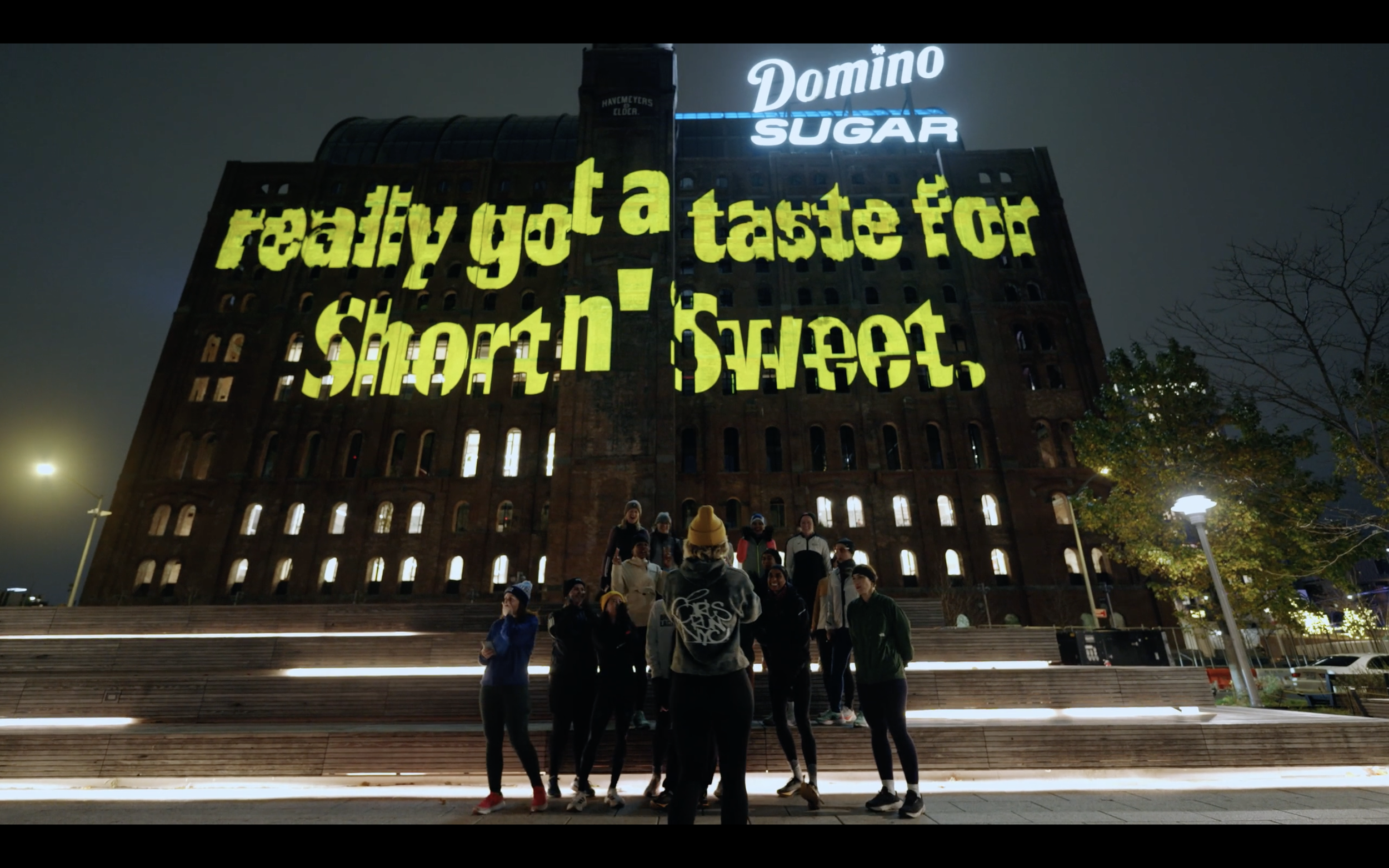
But this time, Wrapped wasn't just happening online. It was happening here, in Williamsburg, projected onto one of Brooklyn's most iconic buildings, visible from both sides of the East River.
Brands are moving beyond telling people what they stand for. They're creating environments where people experience it themselves. Pop-ups. Installations. Projection mapping that turns buildings into living billboards.
The technology is incredible. And brands are turning the world into a playground.
But here's the reality: you're capturing real life. Real reactions. Real moments.
Our job wasn’t just to document what happened, but to make it feel alive. The moment should feel shared, as if every viewer’s personal Spotify Wrapped was part of the same projection, unfolding on the Domino Sugar Factory and across the neighborhood.
The Problem: How Do You Make a Freezing Waterfront Activation Feel Alive?
Spotify Wrapped unveils in the dead of winter.
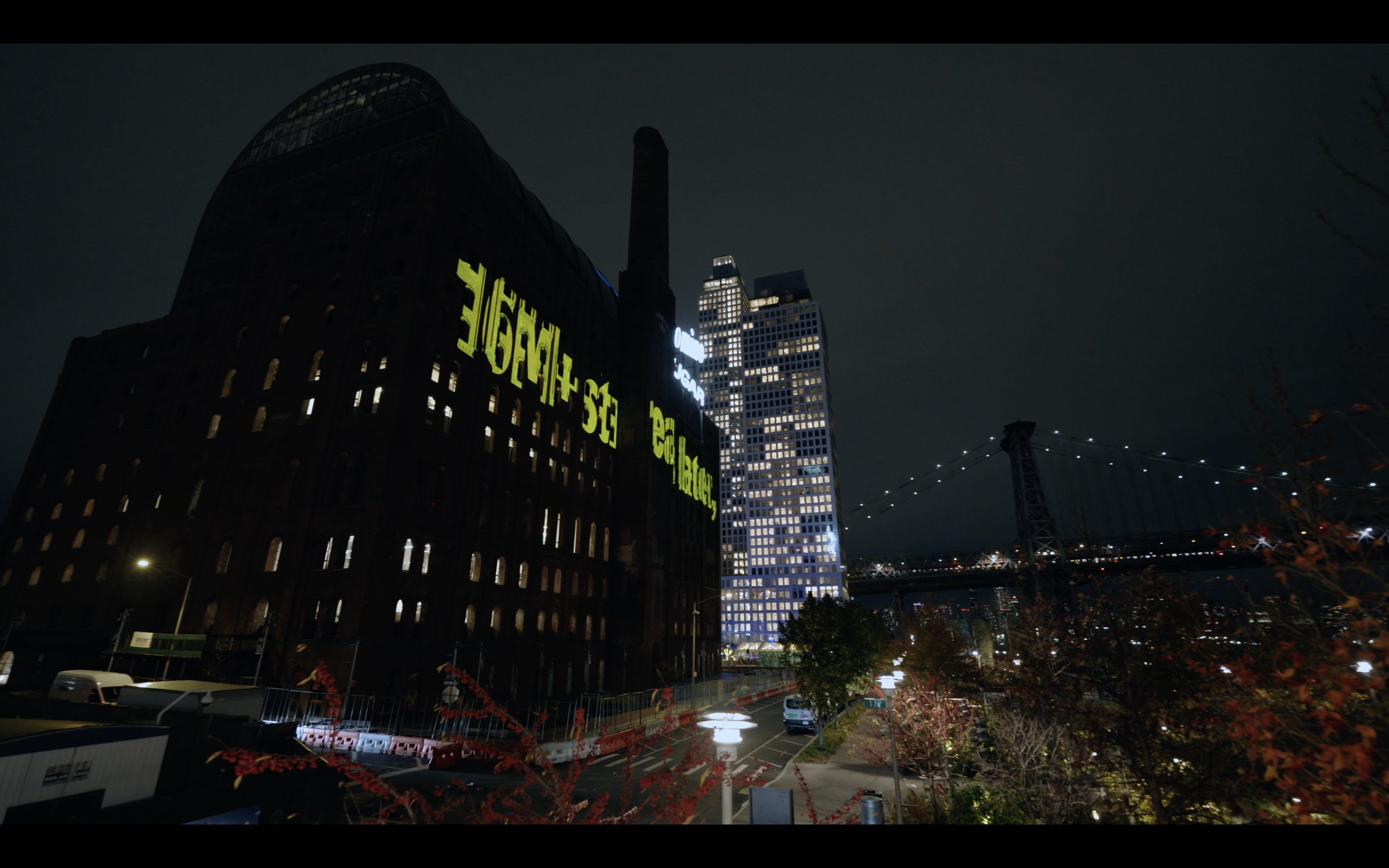
Yes, New York City is one of America's busiest cities. Yes, Williamsburg is one of its most vibrant neighborhoods. But this activation was happening right on the East River. At night. In December.
Gorgeous historic architecture. Iconic location. Brutal weather.
IT WAS COLD.
When you're capturing experiential marketing, the content only works if it feels alive. If the activation looks empty or lifeless, even if the projection itself is stunning, you've failed. The whole point is to show people experiencing something special, something worth being part of.
Here's what we were up against:
Unpredictable foot traffic. It's 27 degrees and windy on a Friday night. Will people actually show up? Will they stay long enough to capture authentic reactions? Or will we be filming a beautiful projection with nobody there to experience it?
Limited time. We had one day. The projection runs on a loop, but each cycle is the same. We couldn't wait for "better" moments or perfect conditions. Whatever happened, happened.
The risk of looking dead on camera. Static shots of a building with a projection? That's a screensaver, not content that makes people wish they'd been there.
The challenge wasn't just documenting the projection. It was making a freezing winter night feel like the cultural moment it actually was.
The Solution: Movement Creates Life (And Documentary Instincts Know Where to Find It)
We didn't plant ourselves in one spot and let the projection play on loop.
We moved.
Documentary filmmakers understand something most brand content creators miss: action is everything. B-roll isn't filler. It's the connective tissue that makes viewers feel like they were there, even when they weren't. Locations aren’t just architecture and nature, but characters themselves.
Here's what we did differently:
We Captured the Architecture (But Didn't Stop There)
Yes, we got the money shots. Think wide angles of the projection hitting historic brick, the scale of Sabrina Carpenter's face looming over the East River, the interplay of light and industrial texture.
The Domino Sugar Factory has been part of Brooklyn's skyline since 1856. It survived industrial decline, sat abandoned, and recently underwent a massive renovation. That history gives the projection weight. It's not just "brand activation on random building," it's Spotify Wrapped on a landmark that represents Brooklyn's evolution.
We treated the building like a character in the story, giving it time to reveal itself from different angles and proximities.
But architecture alone doesn't create life. People do.
We Captured Real Reactions (Not Staged Moments)
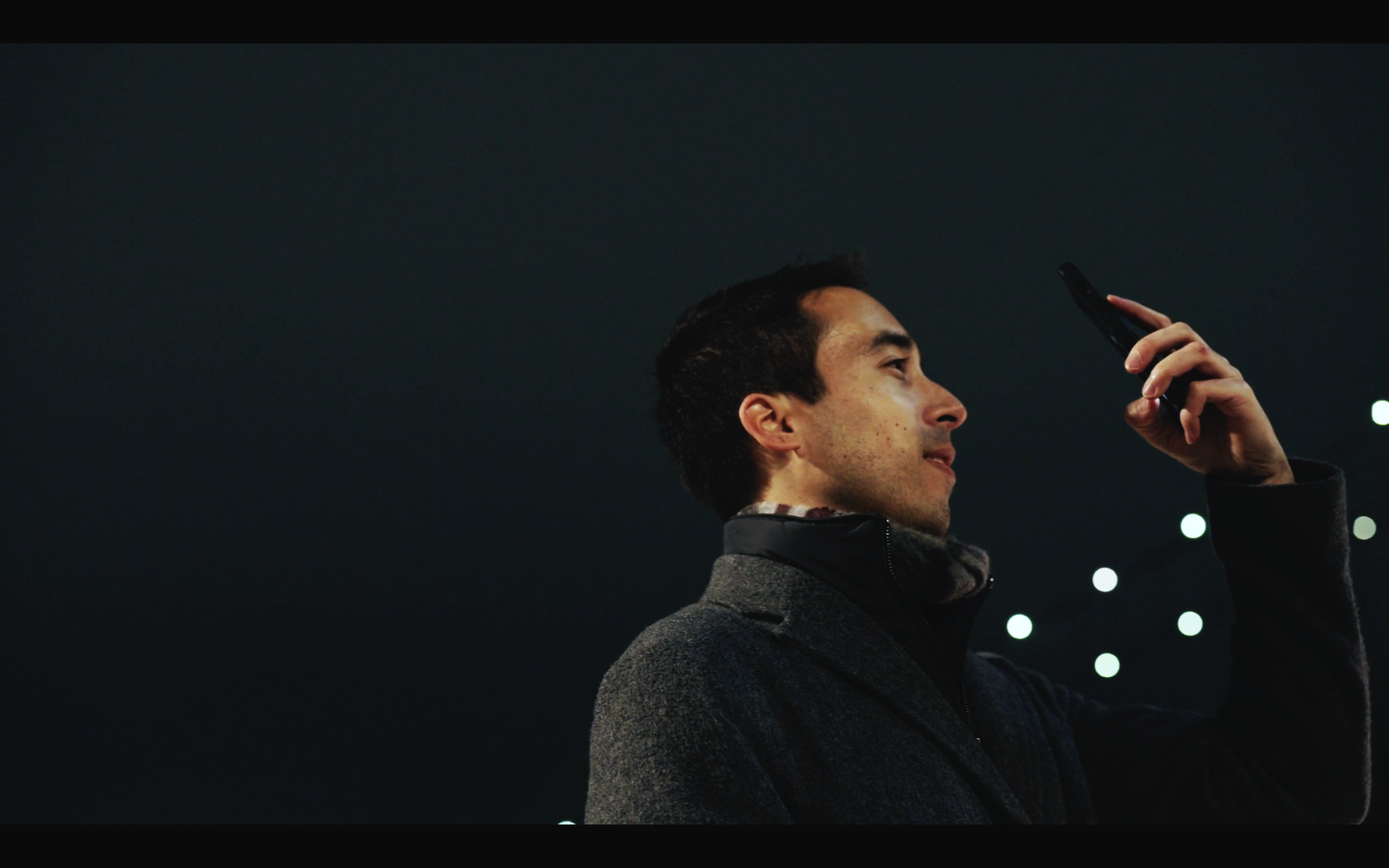
We stayed mobile, moving through the crowd with our cameras, looking for authentic responses:
Close-ups of people stopping mid-walk to pull out their phones
That specific look of delight when someone stumbles onto something unexpected
Groups of friends pointing and laughing at their favorite artists projected three stories high
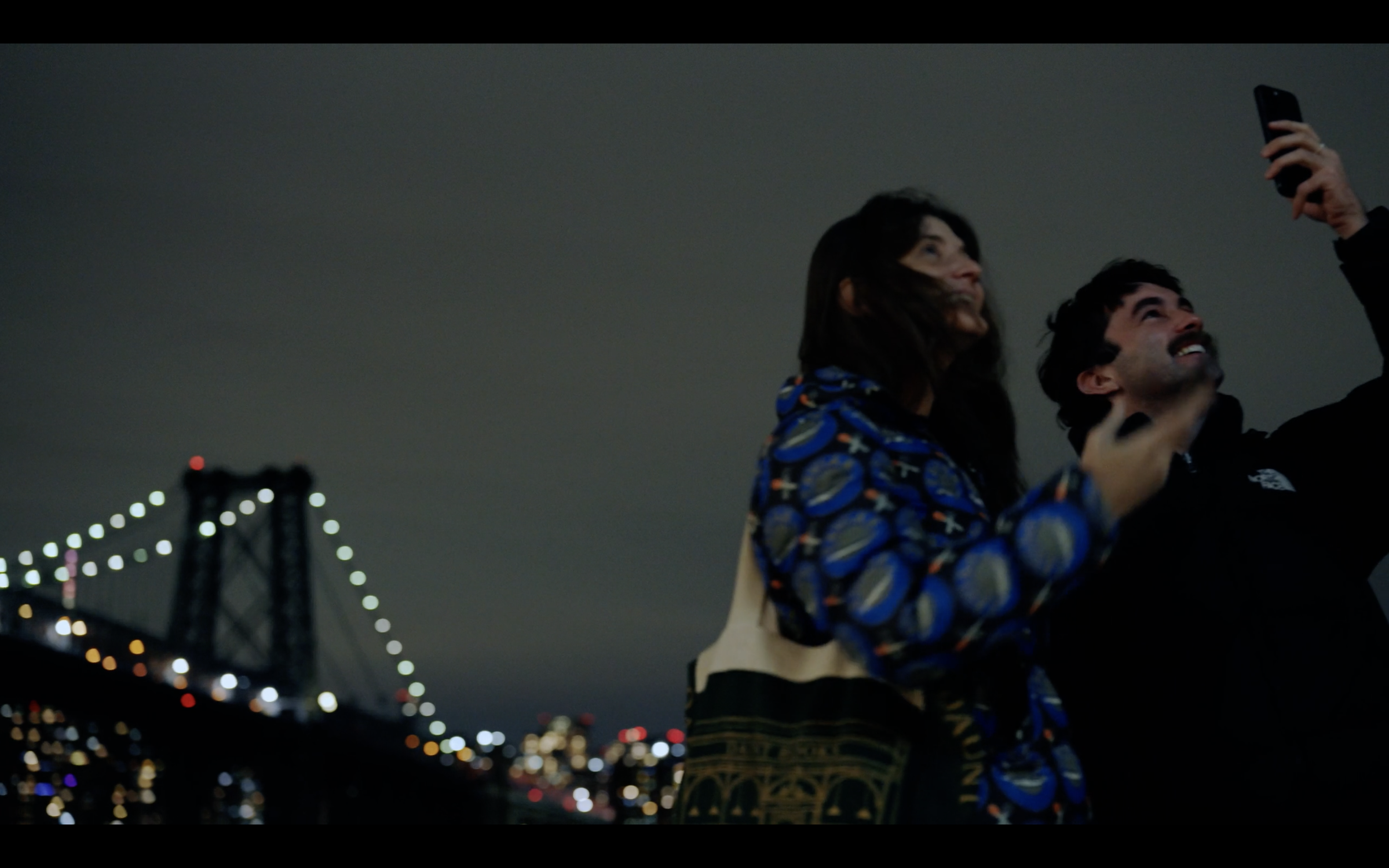
Couples taking selfies with Taylor Swift glowing behind them
These weren't actors. These were real New Yorkers having real reactions to an experience in their neighborhood.
That authenticity is what makes experiential content work. You can't fake it. You can only be ready to capture it when it happens.
We Captured the Life of the Neighborhood
This is where documentary thinking separates good coverage from great content.
We didn't just film the activation. We filmed Williamsburg experiencing the activation.
Runners jogging along the waterfront with pop stars’ silhouettes glowing behind them. Dog walkers pausing while their dogs sniffed around, completely oblivious to the cultural moment happening overhead. Cyclists rolling past. Late-night walkers bundling against the cold but stopping anyway because the projection was impossible to ignore.
These moments did two things:
They showed scale. A jogger in the foreground with a massive projection behind them communicates size better than any static wide shot.
They showed that this mattered. People weren't just walking by, they were altering their routes, stopping their workouts, breaking their routines to experience this.
That’s the content that pulls people watching from anywhere into the moment.
We Kept Moving (Because Static = Death)
In documentary work, you learn quickly that stillness reads as lifeless on camera.
Even beautiful stillness.
So we moved constantly. Different angles. Different proximities. Handheld shots that created energy. Movement that mirrored the foot traffic around us.
The projection itself was static. It played on a loop. But our coverage wasn't. We created dynamism through camera movement, through capturing people in motion, through treating the entire waterfront park as our canvas instead of just the building.
By the time we wrapped (no pun intended), we had footage that felt alive, urgent, and unmissable, even though it was shot on one of the coldest nights of December.
Why Documentary Thinking Wins in Experiential Content
Here's what we've learned after years of making documentaries and brand films:
The best brand content doesn't feel like brand content. It feels like you stumbled onto something real.
Experiential marketing is as close to documentary work as you can get in brand storytelling. You're not producing, you're capturing. The brand isn't directing every moment. It's creating the conditions for moments to emerge, and our job is to recognize and capture the ones that matter.
We know from documentary work that:
Action drives engagement. Static shots lose attention within seconds. Movement keeps people watching. Camera movement, subject movement, environmental movement.
Location is a character. Where something happens shapes how it feels. The Domino Sugar Factory wasn't just a backdrop. It was part of the story, a landmark being activated by culture.
Authenticity can't be faked. Real reactions beat scripted ones every single time. You can feel the difference, even if you can't articulate why.
These aren't just filmmaking principles. They're the difference between content people scroll past and content that makes them stop, watch, and share.
If Your Brand Is Creating Experiences, We Should Talk
Experiential marketing isn't going anywhere. If anything, it's accelerating.
Brands are building pop-ups, activations, installations, and immersive experiences because that's what cuts through in an oversaturated content landscape. But those moments only matter if someone's there to capture them in a way that translates to people who weren't physically present.
That's where we come in.
We're not event videographers who show up with a shot list and leave when it's done. We're documentary filmmakers who understand brand strategy. We know how to show up to chaos and leave with a story.
We know how to:
Read a scene in real time and recognize what matters
Move with purpose to capture action and energy
Make unpredictable conditions work in your favor
Turn authentic moments into content a shared experience
If you're planning an experiential campaign, whether it's a one-night projection mapping in Brooklyn or a multi-city activation tour, you need a team that can think on their feet, adapt to conditions, and turn real moments into content that feels like people missed out if they weren't there.
That's North Fifth Media.
We understand that the best content doesn't come from perfect conditions. It comes from showing up prepared to adapt.
Let's talk about your next activation. Whether it's in our backyard or yours, we'll make sure the moment doesn't just happen—it gets captured in a way that makes people feel it.
Contact North Fifth Media to start the conversation.
Because cultural moments don't wait. And neither should you.